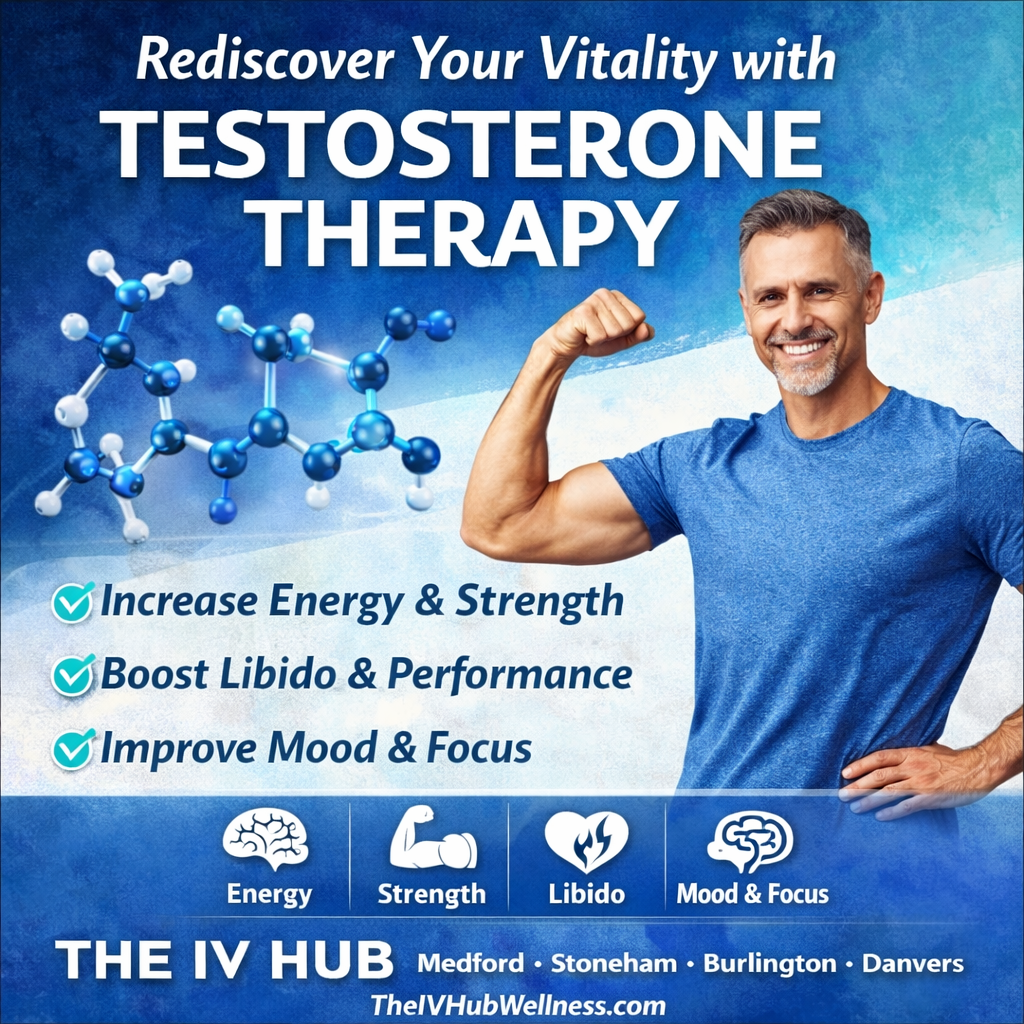
Welcome to The IV Hub Wellness, your premier destination for medically supervised, cutting-edge regenerative and restorative treatments. Aging is a natural part of life, but the fatigue, loss of strength, and diminished drive that often accompany it do not have to be your permanent reality.
For many men—and some women—the secret culprit behind this gradual decline in vitality is suboptimal hormone levels. If you have been feeling “off,” lacking the energy you once had, or struggling to maintain your physique despite a good diet and exercise, you might be experiencing the effects of low testosterone. Fortunately, modern medicine offers a safe, effective, and transformative solution: testosterone therapy.
In this extensive guide, we will explore the critical role testosterone plays in the human body, how to recognize the symptoms of a deficiency, the profound benefits of restoring your hormone levels, and what you can expect when you partner with The IV Hub Wellness for your restorative journey.
Table of Contents
-
Understanding Testosterone and Its Role in the Body
-
The Silent Epidemic: Recognizing the Symptoms of Low-T
-
The Core Benefits of Testosterone Therapy
-
Physical Transformation and Muscle Mass
-
Fat Loss and Metabolic Health
-
Cognitive Clarity and Mental Well-being
-
Libido and Sexual Health
-
Bone Density and Longevity
-
-
How Testosterone Therapy Works
-
Dispelling the Myths: Safety and Monitoring
-
Is Testosterone Therapy Right for You?
-
Why Choose The IV Hub Wellness?
-
Our Clinic Locations
-
Frequently Asked Questions (FAQ)
-
Conclusion
Understanding Testosterone and Its Role in the Body
Testosterone is a crucial steroid hormone produced primarily in the testicles in men and the ovaries in women, with a small amount also produced by the adrenal glands. It is the primary male sex hormone, or androgen, responsible for the development of male physical characteristics. However, its role extends far beyond reproductive health.
In the human body, testosterone acts as a master regulator. It binds to androgen receptors located in almost every tissue, influencing everything from muscle protein synthesis and bone mineralization to red blood cell production and fat distribution. In the brain, it interacts with neurotransmitters to regulate mood, focus, and drive.
During puberty, testosterone levels surge, peaking in late adolescence and early adulthood. However, starting around the age of 30, testosterone levels naturally begin to decline by about 1% to 2% each year. While this is a normal biological process, modern lifestyle factors—such as chronic stress, poor diet, lack of sleep, and exposure to endocrine-disrupting chemicals—can drastically accelerate this decline, leading to a condition known clinically as hypogonadism, or simply, “Low-T.”
The Silent Epidemic: Recognizing the Symptoms of Low-T
The decline of testosterone is rarely a sudden crash; instead, it is a slow, insidious leak of your vitality. Because the symptoms mimic the general signs of “getting older,” many individuals dismiss them for years before seeking help.
The symptoms of Low-T generally fall into three main categories:
1. Physical Symptoms:
-
Chronic Fatigue: A deep, persistent exhaustion that doesn’t resolve with adequate sleep or caffeine.
-
Loss of Muscle Mass: A noticeable decrease in muscle size and strength, even if you are maintaining your regular workout routine.
-
Increased Body Fat: Especially the accumulation of visceral fat around the abdomen and chest.
-
Decreased Physical Performance: Longer recovery times after physical exertion and a general feeling of weakness.
2. Cognitive and Emotional Symptoms:
-
Brain Fog: Difficulty concentrating, poor memory recall, and a lack of mental sharpness.
-
Mood Changes: Increased irritability, anxiety, and a higher susceptibility to depressive moods or a general lack of motivation.
-
Loss of Drive: A noticeable drop in competitiveness, ambition, and the “zest” for life.
3. Sexual Symptoms:
-
Reduced Libido: A significant decrease in the desire for sexual activity.
-
Erectile Dysfunction: Difficulty achieving or maintaining an erection.
-
Decreased Sensation: A general blunting of sexual pleasure and performance.
If you are experiencing a combination of these symptoms, your body may be signaling that your hormone levels are out of balance.
The Core Benefits of Testosterone Therapy
testosterone therapy—often referred to as Testosterone Replacement Therapy (TRT)—is a medical treatment designed to restore your testosterone to optimal, healthy levels. When administered correctly under medical supervision, the benefits are systemic, profound, and life-changing.
Physical Transformation and Muscle Mass
One of the most immediate and noticeable benefits of testosterone therapy is its effect on body composition. Testosterone is highly anabolic. It stimulates protein synthesis, allowing your body to build and repair muscle tissue more efficiently. Patients typically experience an increase in lean muscle mass, enhanced physical strength, and a significantly improved response to resistance training. Your workouts will yield better results, and your recovery time will drop dramatically.
Fat Loss and Metabolic Health
Low testosterone often creates a vicious cycle: low T leads to an increase in body fat, and an increase in body fat (which contains an enzyme called aromatase that converts testosterone into estrogen) further lowers your testosterone levels. testosterone therapy breaks this cycle. By increasing your metabolic rate and encouraging lipolysis (the breakdown of fats), therapy helps you shed stubborn visceral fat. This not only improves your physique but also heavily reduces your risk of metabolic syndromes, such as type 2 diabetes and cardiovascular disease.
Cognitive Clarity and Mental Well-being
The brain is dense with androgen receptors. When testosterone levels are restored, patients frequently report a rapid clearing of “brain fog.” You can expect sharper focus, better memory retention, and a renewed sense of mental agility. Furthermore, testosterone has a profound impact on mood regulation. Many men who struggled with mild depression, irritability, and anxiety find that testosterone therapy acts as a powerful mood stabilizer, restoring their confidence, ambition, and overall sense of well-being.
Libido and Sexual Health
Perhaps the most well-known benefit of testosterone therapy is the restoration of sexual health. Optimal testosterone levels reignite a dormant libido, improve sexual stamina, and enhance erectile function. For many patients, this renewed intimacy profoundly improves their romantic relationships and personal confidence.
Bone Density and Longevity
As men age, their risk of osteopenia and osteoporosis increases, largely due to declining hormone levels. Testosterone plays a critical role in bone mineralization. Therapy helps to increase bone density, making your skeletal structure stronger and less susceptible to fractures as you age. This structural integrity is a key pillar of long-term physical independence and longevity.
How Testosterone Therapy Works
The goal of testosterone therapy is not to push your hormone levels to unnatural, superhuman extremes. The objective is optimization—returning your levels to the upper quadrant of the normal, healthy reference range for your age.
The journey begins with a comprehensive blood panel. This allows our medical professionals to assess not just your total testosterone, but your free testosterone (the amount actually available for your body to use), estrogen levels, thyroid function, and other vital biomarkers.
If a deficiency is diagnosed, we will customize a treatment plan tailored specifically to your biology. Testosterone can be administered in several ways, including topical creams, pellets, or intramuscular injections. At The IV Hub Wellness, we focus on the most effective, bioavailable delivery methods to ensure stable, consistent hormone levels without the “rollercoaster” effect of highs and lows.
Dispelling the Myths: Safety and Monitoring
For decades, testosterone therapy was surrounded by misconceptions, largely due to its association with the abuse of anabolic steroids in bodybuilding. It is crucial to distinguish between medically supervised hormone optimization and illegal steroid abuse.
When prescribed and monitored by a qualified healthcare provider, testosterone therapy is highly safe.
-
The Prostate Myth: Older studies suggested that testosterone therapy caused prostate cancer. Modern, comprehensive urological research has definitively debunked this. While therapy is not recommended for men with active prostate cancer, it does not cause the disease.
-
Cardiovascular Health: Recent studies actually suggest that optimizing testosterone levels can improvecardiovascular health by reducing fat mass, lowering insulin resistance, and improving lipid profiles.
The key to safety is rigorous medical monitoring. At The IV Hub Wellness, we require regular follow-up bloodwork to monitor your hematocrit (red blood cell count), prostate-specific antigen (PSA), and estrogen levels. This ensures your body is responding perfectly to the treatment and allows us to make micro-adjustments to your dosage as needed.
Is Testosterone Therapy Right for You?
testosterone therapy is not a magic pill, nor is it a substitute for a healthy lifestyle. It is a powerful medical tool designed for individuals who are genuinely suffering from clinical hormone deficiencies.
The ideal candidate is someone who:
-
Is experiencing the physical, mental, or sexual symptoms of Low-T.
-
Has had their deficiency confirmed via comprehensive blood testing.
-
Is committed to pairing their therapy with proper nutrition, regular exercise, and adequate sleep for maximum results.
If you are tired of feeling like a shadow of your former self, scheduling a consultation and getting your bloodwork done is the first, empowering step toward taking control of your health.
Why Choose The IV Hub Wellness?
Hormone optimization is a highly specialized field of medicine. You deserve a partner who understands the intricate balance of the human endocrine system.
At The IV Hub Wellness, we do not believe in one-size-fits-all medicine. We take a holistic, deeply personalized approach to your health. From your initial consultation through your ongoing monitoring, our experienced medical staff is dedicated to providing compassionate, elite-level care. We use only the highest-quality, pharmaceutical-grade medications and the most advanced diagnostic testing available.
When you choose us, you are not just getting a prescription; you are getting a dedicated team committed to helping you look, feel, and perform at your absolute best. Visit our main website to learn more about our comprehensive wellness approach: https://theivhubwellness.com.
Our Clinic Locations
Ready to start your journey to peak vitality? We make accessing premium healthcare convenient. The IV Hub Wellness proudly serves Massachusetts through our four state-of-the-art clinics. Contact the location nearest you to schedule your comprehensive hormone consultation:
-
The IV Hub Medford 469 Salem St Suite 23, Medford, MA 02155 Phone: 781-799-2827
-
The IV Hub Stoneham 117 Main Street Suite 27, Stoneham, MA 02180 Phone: 978-799-7122
-
IV Hub Burlington My Salon Suite 115, 154 Cambridge St, Burlington, MA 01803 Phone: 781-812-7550
-
IV Hub Danvers 301 Newbury St # 39, Danvers, MA 01923 Phone: 978-308-9845
Frequently Asked Questions (FAQ)
1. How long does it take to see the benefits of testosterone therapy? Results occur in phases. Most patients notice improvements in their mood, energy levels, and libido within the first 3 to 4 weeks. Physical changes, such as increased muscle mass and fat loss, generally become noticeable after 3 to 6 months of consistent therapy paired with a healthy lifestyle.
2. Does testosterone therapy hurt? If you are prescribed injectable testosterone, the injections are typically administered into the glute or thigh muscle using a very fine needle. Most patients report only very mild, momentary discomfort that they quickly get used to.
3. Will I have to be on therapy forever? Because testosterone therapy suppresses your body’s natural (albeit low) production of the hormone, it is generally considered a long-term or lifelong commitment to maintain the benefits. If you stop the therapy, your testosterone will revert to its previous low levels, and your symptoms will likely return.
4. Are there side effects? When carefully monitored by a medical professional, side effects are minimal. Potential mild side effects can include acne, fluid retention, or an increase in red blood cell count. This is exactly why routine bloodwork is mandatory—so we can manage and prevent these issues before they become problematic.
5. Does testosterone therapy cause infertility? It can significantly reduce sperm count while you are actively on the medication, as it signals the testes to slow down production. If you are planning to have children in the near future, inform your provider. There are adjunct medications we can prescribe alongside your therapy to preserve your fertility.
Conclusion
You do not have to accept fatigue, weakness, and a loss of drive as inevitable consequences of aging. Your body was designed to thrive, and restoring your hormonal balance is often the key to unlocking that potential. testosterone therapyoffers a scientifically proven, medically sound pathway to reclaiming your prime, revitalizing your physique, and renewing your zest for life.
At The IV Hub Wellness, we are here to guide you every step of the way.
Would you like me to help you draft an email to the clinic location closest to you to inquire about booking your initial lab work and consultation?