As we age, it is entirely natural for our bodies to experience a shift in energy, metabolism, and physical vitality. You might notice that recovering from a tough workout takes a few days longer, losing stubborn body fat feels like an uphill battle, or your overall energy levels just aren’t what they used to be in your twenties and thirties. For decades, these changes were simply accepted as an unavoidable part of getting older. However, modern regenerative medicine has introduced groundbreaking ways to address the root causes of these age-related declines.
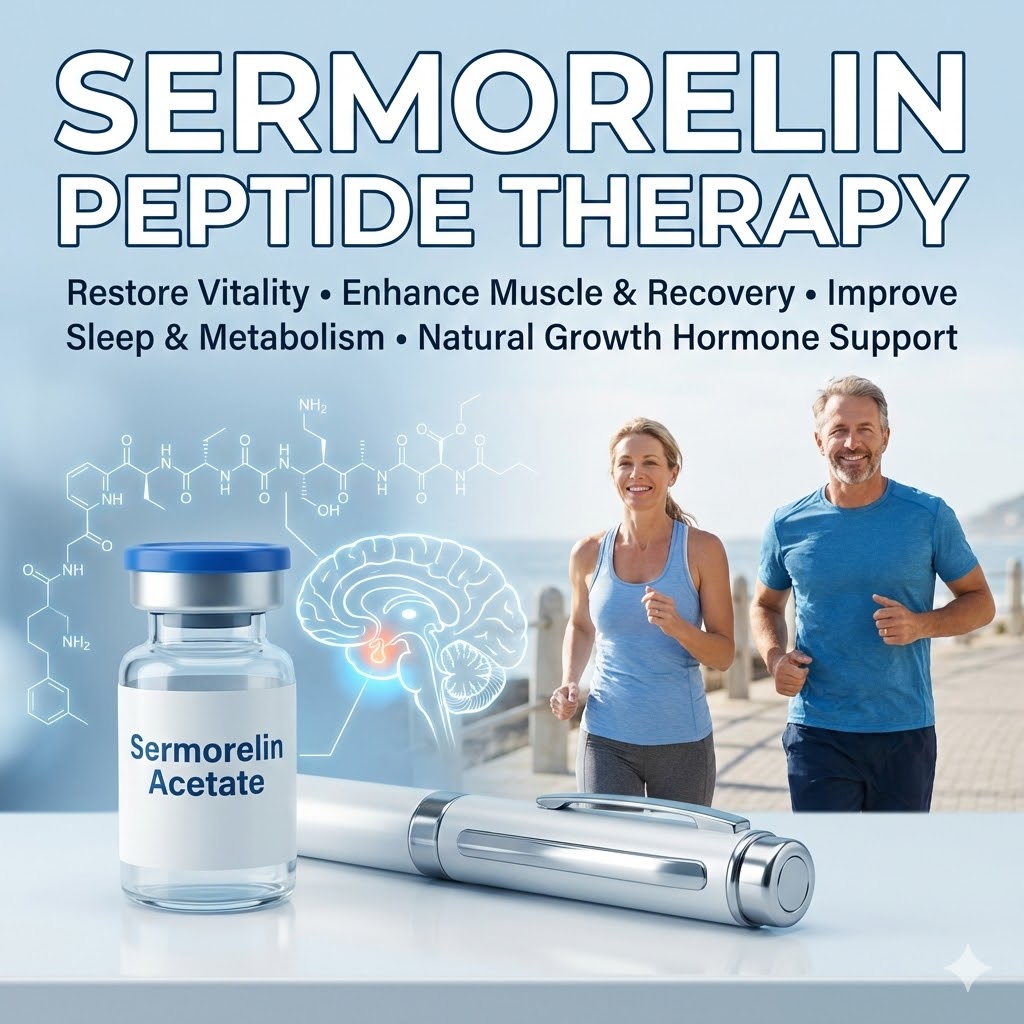
Enter sermorelin peptide therapy—a cutting-edge treatment designed to stimulate the body’s natural production of growth hormone. Unlike synthetic hormone replacements that bypass your body’s natural systems, this therapy works in harmony with your biology to restore youthful vitality, enhance physical performance, and improve your overall quality of life.
In this comprehensive guide, we will explore exactly how this remarkable peptide works, the multitude of benefits it offers, how it compares to traditional hormone replacement, and what you can expect if you decide to embark on this restorative journey.
Table of Contents
-
What is Sermorelin Peptide Therapy?
-
The Science: How Does It Work in the Body?
-
Recognizing the Symptoms of Growth Hormone Deficiency
-
The Core Benefits of Treatment
-
Enhanced Physical Performance and Muscle Mass
-
Accelerated Fat Loss and Metabolism
-
Superior Sleep Quality and Recovery
-
Anti-Aging: Skin Elasticity and Youthful Vitality
-
Improved Cognitive Function
-
-
Why Natural Stimulation is Better Than Direct HGH Therapy
-
The Timeline: What to Expect During Treatment
-
Who is the Ideal Candidate?
-
Safety Profile and Potential Side Effects
-
Frequently Asked Questions (FAQ)
-
Conclusion
What is Sermorelin Peptide Therapy?
At its core, this therapy utilizes a specific, synthetic peptide that mimics the growth hormone-releasing hormone (GHRH) naturally produced by the hypothalamus in your brain. A peptide is simply a short chain of amino acids—the building blocks of proteins—that acts as a signaling molecule within the body.
When administered, this specific peptide sends a direct signal to the pituitary gland, instructing it to produce and release more of your own endogenous (natural) human growth hormone (HGH). By stimulating the pituitary gland in this way, the therapy can help counteract the effects of aging and promote overall health and vitality.
It is a powerful tool in the realm of regenerative and anti-aging medicine, particularly beneficial for individuals experiencing the slow, progressive decline of hormone production that begins after the age of 30.
The Science: How Does It Work in the Body?
To truly appreciate the elegance of this therapy, it helps to understand the biological mechanism behind human growth hormone production.
In a healthy, youthful body, the hypothalamus releases GHRH in a pulsatile manner (in bursts, usually during deep sleep). This GHRH travels a very short distance to the anterior pituitary gland, which responds by secreting Human Growth Hormone (HGH) into the bloodstream.
Once HGH enters the bloodstream, it travels to the liver, where it stimulates the production of Insulin-like Growth Factor-1 (IGF-1). IGF-1 is the primary mediator of growth hormone’s effects; it is responsible for cellular repair, muscle growth, metabolism regulation, and tissue regeneration throughout the entire body.
As we age, the hypothalamus produces less GHRH. Consequently, the pituitary gland releases less HGH, leading to a cascade of aging symptoms. Sermorelin acts as a direct substitute for the declining GHRH. It binds to the exact same receptors on the pituitary gland, effectively “waking it up” and restoring the youthful, pulsatile release of growth hormone. Because it relies on your body’s intact pituitary gland to do the heavy lifting, it is a biologically natural way to elevate hormone levels.
Recognizing the Symptoms of Growth Hormone Deficiency
Adult-onset growth hormone deficiency is rarely a sudden event; rather, it is a gradual decline that creeps up over years. Many people mistake these symptoms simply as “getting older,” not realizing that a specific hormonal deficiency is at play.
Common symptoms of suboptimal growth hormone levels include:
-
Decreased Muscle Mass: A noticeable loss of muscle tone and strength, even with regular exercise.
-
Increased Body Fat: Especially stubborn visceral fat that accumulates around the abdomen and waistline.
-
Reduced Energy Levels: Chronic fatigue, lethargy, and a general lack of stamina throughout the day.
-
Impaired Cognitive Function: Brain fog, difficulty concentrating, and subtle memory issues.
-
Poor Sleep Quality: Difficulty falling asleep, staying asleep, or waking up feeling unrefreshed.
-
Slower Recovery: Aching joints and prolonged soreness after physical exertion or minor injuries.
-
Changes in Skin and Hair: Thinning hair, decreased skin elasticity, and the development of deeper wrinkles.
If you are experiencing a combination of these symptoms, you may be a prime candidate for peptide intervention.
The Core Benefits of Treatment
One of the primary benefits of this therapy is its profound, systemic impact on the body. Because growth hormone receptors are located in almost every tissue, restoring optimal levels provides a wide array of physical and mental benefits.
Enhanced Physical Performance and Muscle Mass
Growth hormone and IGF-1 are highly anabolic, meaning they promote the growth and repair of tissues. Increased levels of growth hormone can lead to improved muscle strength and a noticeable increase in lean muscle mass. By enhancing protein synthesis at the cellular level, your muscles can repair themselves more efficiently after micro-tears caused by resistance training, allowing you to break through plateaus and achieve better physical conditioning.
Accelerated Fat Loss and Metabolism
While it helps build muscle, it simultaneously encourages lipolysis—the breakdown of lipids (fats). Growth hormone forces the body to utilize stored body fat as an energy source rather than relying solely on glucose. This leads to a significant reduction in body fat, particularly the dangerous visceral fat that surrounds internal organs, helping to sculpt a leaner, more toned physique.
Superior Sleep Quality and Recovery
Sleep is the foundation of health, and growth hormone plays a pivotal role in regulating our circadian rhythms. Patients often report that improved sleep quality is the very first benefit they notice. You will likely experience deeper, more restorative stages of sleep (REM and slow-wave sleep). This profound rest translates to faster recovery from workouts and injuries, as well as a massive boost in daily energy levels.
Anti-Aging: Skin Elasticity and Youthful Vitality
Collagen and elastin are the proteins responsible for keeping your skin firm, plump, and youthful. Growth hormone directly stimulates the production of these crucial structural proteins. As a result, therapy has been shown to enhance skin elasticity, reduce the appearance of fine lines and wrinkles, and improve skin hydration, leading to a noticeably more youthful appearance.
Improved Cognitive Function and Immune Support
Beyond physical changes, balancing your hormones has a profound effect on the brain. Patients frequently report improved cognitive function, enhanced mental clarity, and a better overall mood. Additionally, growth hormone is vital for the development and function of immune cells. By boosting immune function, this therapy helps your body defend against illness and recover from systemic stress more effectively.
Why Natural Stimulation is Better Than Direct HGH Therapy
You might be wondering: Why use a peptide to stimulate growth hormone instead of just taking synthetic Human Growth Hormone directly?
This is a crucial distinction. Unlike direct growth hormone administration, this peptide works by stimulating the body’s own natural production processes. This natural approach offers several major advantages, significantly reducing the risk of side effects associated with synthetic growth hormone.
-
Preservation of the Feedback Loop: When you inject synthetic HGH directly, your body recognizes that hormone levels are artificially high. In response, the pituitary gland shuts down its own natural production—a process known as a negative feedback loop. Sermorelin does not cause this shutdown. It simply encourages the pituitary to work harder, keeping your endocrine system active and healthy.
-
No Risk of Overdose: Because it stimulates natural production, the pituitary gland retains its built-in safety mechanisms. Once optimal levels of HGH are reached in the bloodstream, the pituitary will naturally stop releasing more, preventing the dangerous side effects of hormone toxicity (like joint swelling or abnormal organ growth) often seen with synthetic HGH abuse.
-
Pulsatile Release: Direct HGH injections cause a massive, unnatural spike in hormone levels. Peptides encourage a natural, pulsatile release (bursts of hormone release), which mirrors the way a healthy, youthful body operates.
The Timeline: What to Expect During Treatment
Regenerative medicine is not an overnight quick fix; it is a process of rebuilding and restoring your body’s natural rhythms. The results are cumulative, meaning they build upon themselves over weeks and months of consistent therapy.
Here is a general timeline of what most patients experience:
-
Weeks 1 to 4: The earliest and most prominent change is an improvement in sleep quality. You will wake up feeling more rested, with increased daytime energy and improved mood.
-
Weeks 4 to 8: You will begin to notice physical changes. Recovery from exercise becomes noticeably faster. Skin starts to appear more hydrated and elastic, and hair and nail growth may accelerate.
-
Weeks 8 to 12: Body composition changes become apparent. You will likely see a reduction in stubborn body fat (especially around the midsection) and an increase in lean muscle tone.
-
Months 3 to 6: The full, systemic benefits are realized. Peak increases in muscle mass, bone density, cognitive clarity, and overall vitality are achieved.
Who is the Ideal Candidate?
This therapy is highly versatile, but it is not for everyone. The ideal candidates are generally men and women over the age of 30 who are experiencing the classic symptoms of age-related growth hormone decline (somatopause).
It is particularly well-suited for individuals who are already committed to a healthy lifestyle—including a balanced diet and regular exercise—but are feeling held back by fatigue, slow recovery, or stubborn fat retention.
Consulting with a healthcare professional can help determine if this peptide therapy is a suitable option for your specific health needs and goals. A comprehensive blood panel will usually be conducted to evaluate your baseline hormone levels, ensuring that the treatment is tailored safely and effectively to your unique biology.
Safety Profile and Potential Side Effects
Because it is an analog of a naturally occurring hormone, this treatment is generally very well tolerated by the human body with a high safety profile.
When side effects do occur, they are typically mild and localized to the injection site. These may include:
-
Slight redness, swelling, or pain at the site of injection.
-
Occasional dizziness or flushing immediately after administration.
-
Mild headaches (usually temporary as the body adjusts to shifting hormone levels).
It is contraindicated for individuals with active cancer, as stimulating cellular growth is not recommended when malignancies are present. Always disclose your full medical history to your provider before beginning any hormone optimization program.
Frequently Asked Questions (FAQ)
1. How is the peptide administered? It is typically administered via a subcutaneous injection (a tiny needle injected just under the skin into the fatty tissue, usually in the abdomen). It is a nearly painless process that patients easily learn to do themselves at home.
2. When is the best time to take it? To mimic the body’s natural rhythm of growth hormone release, it is almost always prescribed to be taken at night, right before bed. This is because the body naturally produces the majority of its growth hormone during deep, restorative sleep.
3. Do I have to be on this therapy forever? No. Unlike direct hormone replacement therapies that you often have to take for life, peptide therapy is often used in cycles. A common protocol is 3 to 6 months of active therapy, followed by a “holiday” or break. Because it helps heal and stimulate the pituitary gland, many patients maintain their benefits long after the treatment cycle ends.
4. Is it a steroid? Absolutely not. Anabolic steroids are synthetic derivatives of testosterone designed to unnaturally force muscle growth. Sermorelin is a peptide that simply asks your brain to produce your own natural growth hormone at levels you experienced in your youth.
5. How long does it take to see results? While better sleep and increased energy can be noticed in the first few weeks, significant changes to body composition (fat loss and muscle gain) generally take 3 to 6 months of consistent use. Patience and consistency are key to regenerative therapies.
Conclusion
Aging gracefully doesn’t mean you have to surrender your vitality, strength, or mental sharpness. Sermorelin peptide therapy offers a promising approach to maintaining optimal health, allowing you to reclaim the energy and physical resilience of your youth through the power of your body’s own natural regenerative systems. By choosing to stimulate your biology rather than override it, you can safely unlock a healthier, leaner, and more vibrant version of yourself.
Would you like me to help you outline a list of specific questions you should ask a healthcare provider during an initial consultation for peptide therapy?